The difference in one paragraph
SLS (selective laser sintering) fuses the powder with a laser that traces the part's cross-section point by point. MJF (Multi Jet Fusion, an HP technology) jets a liquid onto the powder where the part should form, then heats the whole layer at once with infrared lamps. Both deliver strong, functional parts in PA12. SLS parts are naturally white, MJF parts grey. At Makernaut, both technologies run through selected partners.
MJF and SLS side by side
| Feature | MJF | SLS |
|---|---|---|
| How the powder fuses | Liquid fusing agent + infrared heat across the whole layer | Laser tracing the cross-section |
| Support material | Not needed | Not needed |
| Natural colour | Grey | White |
| Colours at Makernaut | Grey, black | White, black |
| Materials at Makernaut | PA12 | PA12, TPU (flexible) |
| Surface | Matte, slightly grainy | Matte, slightly grainy |
| Technology starting price | €0.45/cm³ | €0.40/cm³ |
| Where | Via partners | Via partners |
How does SLS work?
An SLS printer spreads a thin layer of PA12 powder over the build platform and keeps it just below its melting point. A laser then traces the part's cross-section and fuses the powder there. The platform drops one layer, fresh powder is spread and the cycle repeats.
The unfused powder stays around the part and supports it. So you need no support structures, and you can nest parts inside each other or even print moving hinges in one piece.
How does MJF work?
MJF also starts with a layer of PA12 powder. A print head jets a fusing agent where the powder should fuse and a detailing agent along the edges for crisp outlines. Infrared lamps then heat the entire layer: only the powder with fusing agent melts.
Because a whole layer is processed at once, MJF suits small and medium series well. The mechanical properties are even in all directions. The fusing agent is dark, which is why MJF parts come out of the machine grey.
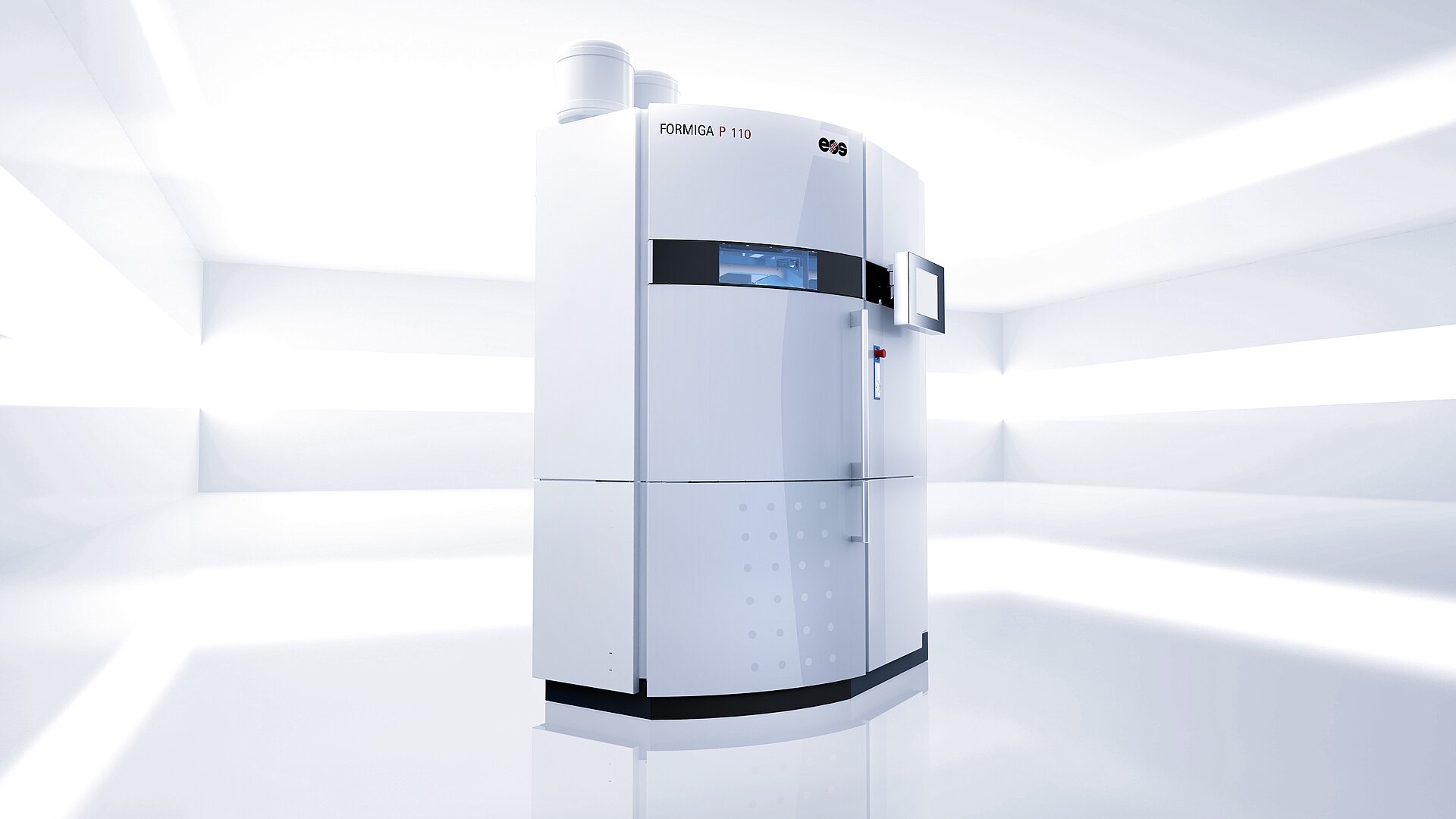 Photo: Nicole W, CC BY-SA 4.0
Surface and colour
Both technologies give a matte, slightly grainy surface that feels like fine sandpaper. Layer lines are barely visible. Blasting helps for a more even look; for a uniform colour, parts can be dyed.
The most visible difference is colour. SLS PA12 is naturally white, so it's the obvious choice if you want a light part or plan to dye it a light colour later. MJF PA12 is grey. If you're after black, both technologies can do it.
Materials and starting prices
At Makernaut you can print in the following materials. All prices are starting prices, per cm³, excl. VAT and excl. finishing.
| Material | Technology | Characteristic | From |
|---|---|---|---|
| PA12 Grey | MJF | Grey, strong and stiff | €0.52/cm³ |
| PA12 Black | MJF | Black, for visible parts | €0.70/cm³ |
| PA12 White | SLS | White, easy to dye | €0.65/cm³ |
| PA12 Black | SLS | Black, for visible parts | €0.70/cm³ |
| TPU | SLS | Flexible, rubber-like | €0.85/cm³ |
Worked example
Take a 50 cm³ part. In PA12 Grey via MJF it starts from €26.00 per part; in PA12 White via SLS from €32.50. If it needs to flex, TPU via SLS starts from €42.50. All excl. VAT and finishing. Volume × material price is a starting point; you'll see your actual price in Quotebase.
Choose MJF if ...
- you want a strong, functional PA12 part at the lowest starting price of these five materials
- a grey or black colour is fine
- you need a small or medium series of the same part
- even properties in all directions matter
Choose SLS if ...
- you want a white part, or plan to dye it a light colour later
- you need a flexible part in TPU, such as a seal, damper or grip
- you're making a functional prototype that will be shown in a light colour
Designing for MJF and SLS
Both technologies largely share the same design rules. Don't make walls too thin, hollow out solid sections and then add at least two openings so the powder can escape. A fully enclosed cavity stays filled with powder and counts as material. Thick, solid blocks can warp a little as they cool; an even wall thickness helps.
Conclusion
MJF and SLS aren't rivals but two versions of the same idea: strong PA12 without supports. Choose MJF for grey or black functional parts and series. Choose SLS if it needs to be white or you need TPU. Not sure? Upload your file to Quotebase and compare both prices, or email info@makernaut.be.